Developing an effective buccal drug product starts with a fundamental question: can the active pharmaceutical ingredient (API) efficiently cross the buccal mucosa and reach systemic circulation?
The buccal route is attracting growing interest as an alternative to conventional oral administration. By delivering drugs through the mucosa lining the inside of the cheek, developers can overcome several limitations associated with gastrointestinal delivery while improving patient convenience and treatment performance.
Buccal delivery can offer significant advantages in a variety of situations:
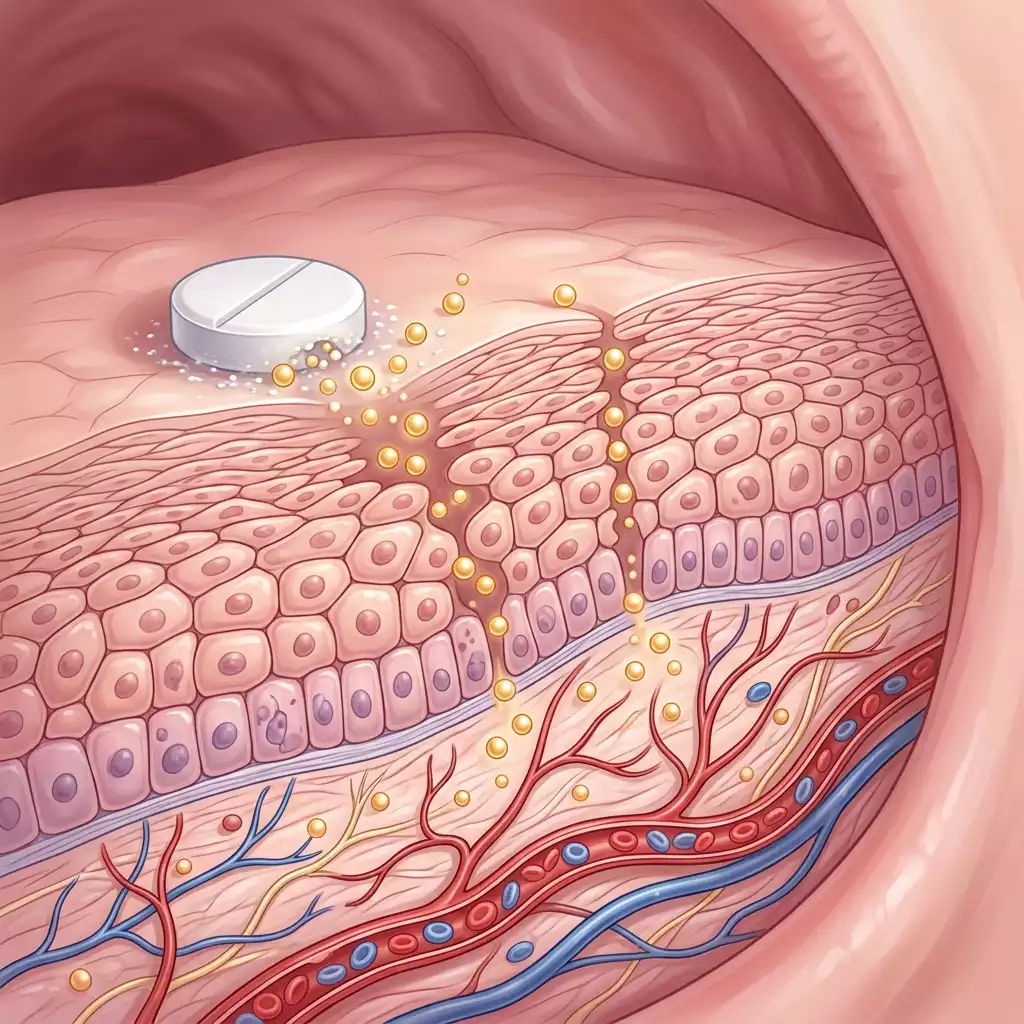
However, the success of any buccal formulation ultimately depends on the ability of the API to permeate the buccal mucosa. Evaluating this parameter as early as possible can significantly reduce development risks and accelerate formulation decisions.
To address this challenge, we have developed an in vitro buccal permeability platform that enables rapid screening of APIs and formulation components during preformulation studies.
The platform is based on Franz diffusion cells combined with the Permeapad® biomimetic membrane, a synthetic barrier designed to mimic passive transport across biological membranes. Since passive diffusion is responsible for the transport of the majority of compounds through the buccal mucosa, this model provides a relevant and practical tool for early-stage assessment.
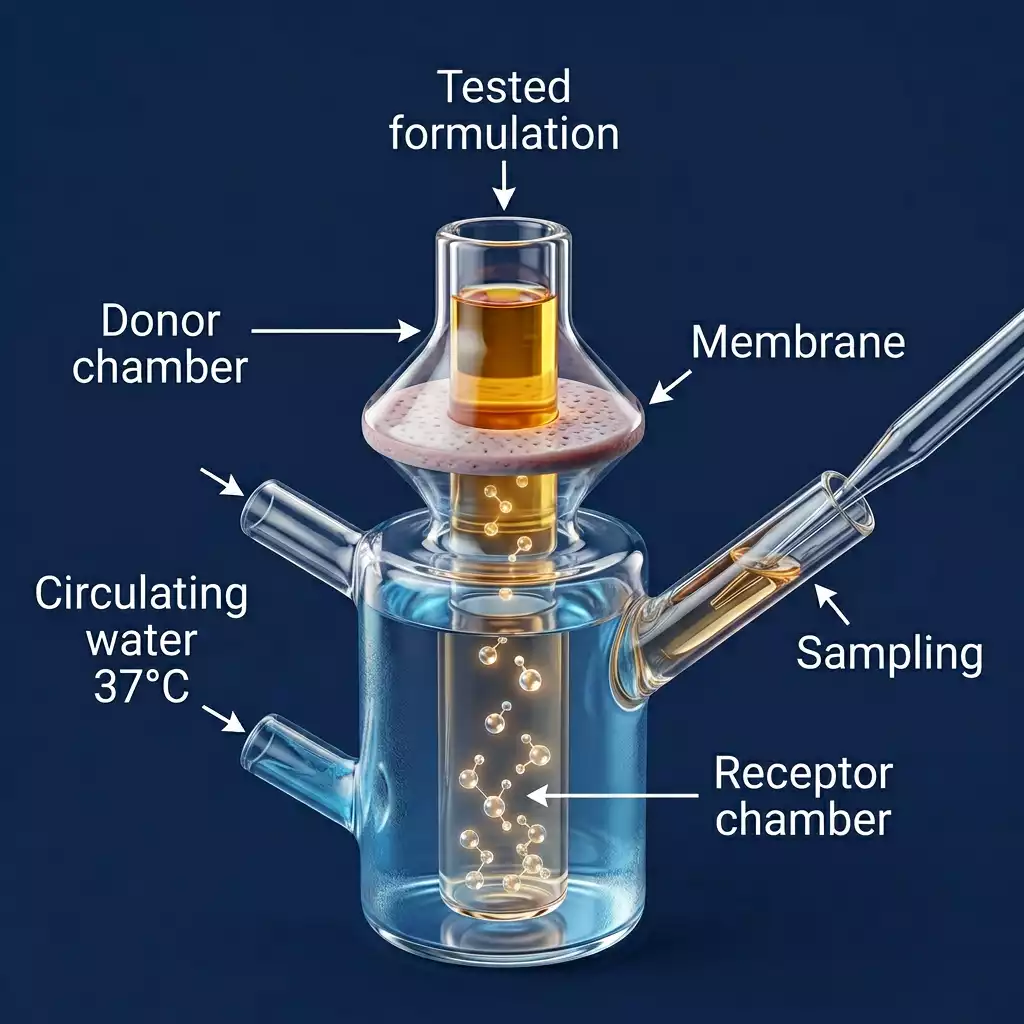
Two key parameters are measured:
Together, these metrics provide valuable insight into the buccal absorption potential of an API and the influence of formulation components.
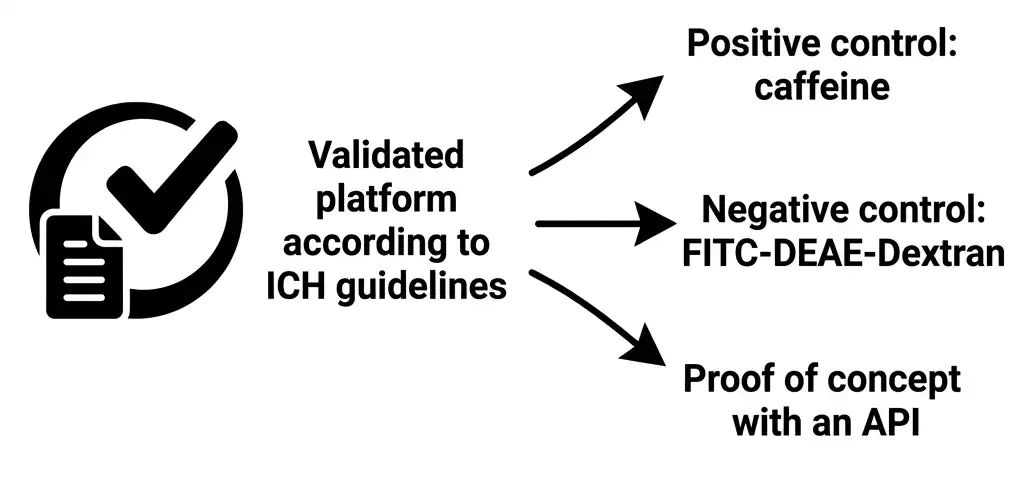
The platform has been developed and optimized using well-characterized reference compounds.
A positive control (caffeine) and a negative control (FITC-DEAE-Dextran) were used to establish the discriminatory power of the model. Measured permeability values were compared with published literature data, demonstrating the relevance and robustness of the system.
In addition, a proof-of-concept study performed with a model peptide confirmed the platform’s ability to evaluate more challenging molecules and support the development of advanced buccal delivery strategies.
Particular attention was also paid to minimizing material consumption, enabling permeability studies to be conducted with limited quantities of API. This represents a major advantage when working with expensive or early-stage drug candidates.
By integrating permeability assessment early in development, formulation teams can make informed decisions before committing significant resources to formulation optimization or clinical studies.
Key benefits include:
The platform can also support excipient selection by identifying combinations capable of enhancing buccal permeation and improving systemic exposure.
Understanding permeability at the earliest stages of development is essential for building successful buccal formulations.
Our buccal permeability platform provides a robust and cost-effective approach to evaluate API performance, screen formulation options, and guide preformulation decisions with confidence.
Whether you are developing a small molecule, peptide, or innovative buccal dosage form, our platform helps focus development efforts on the most promising candidates and accelerate the path toward successful product development.
Interested in evaluating the buccal potential of your API? Contact us or Vanessa Bourgeaux at v.bourgeaux@skyepharma.fr to learn how our platform can accelerate your strategy and improve therapeutic impact.

– Pauline TARLET –
Innovative project manager at Skyepharma, previously obtained a PhD from the University of Lyon 1, and an engineering degree from CPE.
MucoTabs project